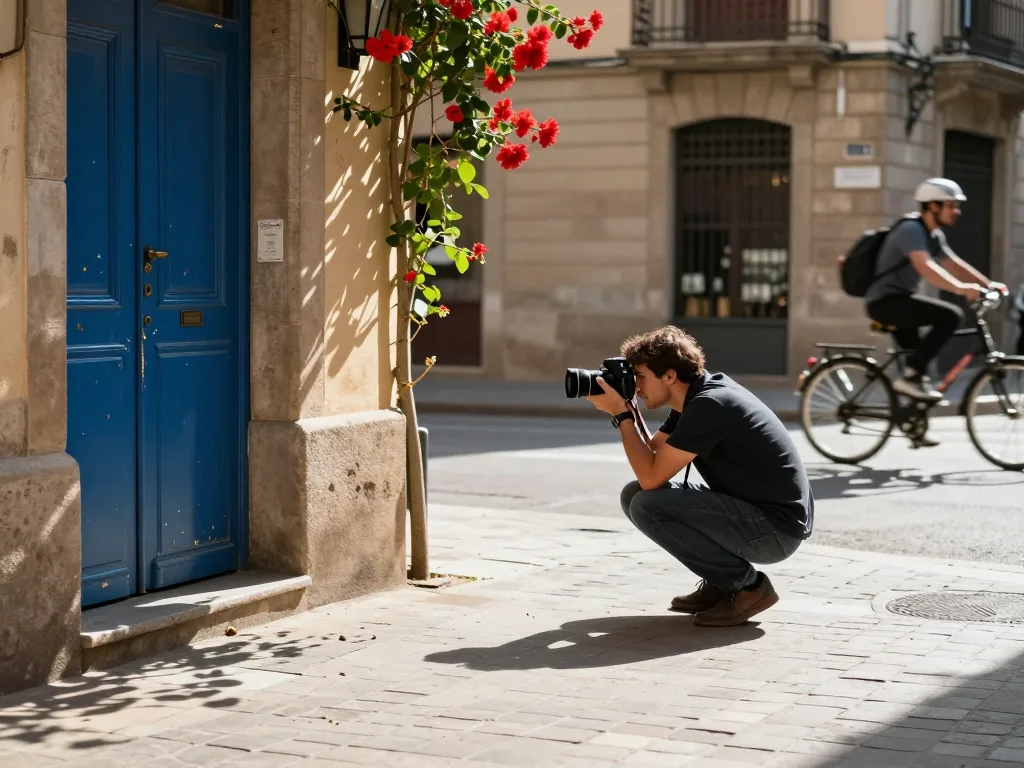
The best way to know a city isn’t through its monuments. It’s through its shadows, its fleeting glances, the quiet poetry of its back alleys. In just one hour, a seasoned street photographer can unlock a Barcelona most visitors never see—transforming the ordinary into the extraordinary with a single click. This guide takes you on a fast-paced visual journey alongside a local expert who knows every hidden corner, from sun-drenched plazas to forgotten stairwells. You’ll learn exactly where to stand, what to look for, and how to capture the raw, unfiltered soul of the Catalan capital. By the end, you’ll have a new lens for experiencing any city—and a pocketful of techniques to make your own photos tell a story.
Why One Hour Is Enough in Barcelona’s Old City
The Gothic Quarter, El Born, and the narrow alleys of the Ciutat Vella pack more visual density per square meter than almost any other urban area in Europe. A single compact neighborhood offers layered facades, shifting light, and constant human movement. One hour feels rich, not rushed. You aren’t fighting distances; you’re reading a palimpsest of Roman walls, medieval arches, and modern cafe life—all within a five-minute walk. The trick is to stop treating the hour as a constraint and start treating it as a frame: a tight, deliberate edit of reality.
The Logic of a Single Neighborhood
Skip the landmark hopping. A professional photographer pre-selects a loop of two to three streets and a central plaza. This allows continuous shooting, quick repositioning, and the chance to wait for the perfect passerby or shadow pattern. Start at Plaça de Sant Felip Neri, where pockmarked stone and a quiet fountain give you a moody base. From there, walk down Carrer de Sant Domènec del Call—a corridor barely wide enough for two people—where morning light slices diagonally across ancient brick. Then loop into Carrer de la Basea, where laundry lines and a sudden burst of orange trees break the stone. The loop is less than 400 meters, yet it yields more usable frames than a full day of museum hopping. You can shoot, step back, wait, and shoot again without ever feeling lost or rushed. Commit: no checking maps, no second-guessing. Just a fluid orbit around a known set of corners.
What You Gain by Going Deep, Not Wide
You’ll leave with a cohesive set of images telling one visual story—cobblestones, doorways, market stalls, fleeting expressions—rather than a disjointed collection of tourist postcards. Because you repeat the same streets, you notice the small shifts: a fishmonger stacking ice at the Mercat de Santa Caterina, a child dragging a scooter over a worn threshold, a waiter wiping a marble table just as a shaft of sun hits the glass. These aren’t random snapshots; they’re variations on a theme. Repetition also lets you anticipate. You know that at the corner of Carrer dels Banys Nous, a delivery van will block the view for exactly forty seconds—then the arch reveals itself. You know the shadow of the cathedral spire crosses the plaza at a specific angle, so you position yourself accordingly. This is the difference between taking pictures and making photographs. In one hour, you can produce a series that feels like a curated essay, each image responding to the next, bound by light, texture, and the quiet rhythm of a neighborhood that has been alive for centuries. That is the real payoff of going deep instead of wide.
Choosing the Right Time of Day for Light and Crowds
Barcelona’s Mediterranean sun is a double-edged sword for street photographers. Between roughly 11 a.m. and 4 p.m., the light drops almost vertically, carving deep, unflattering shadows under eye sockets and chin lines while blowing out highlights on pale stone facades. You will not see a working professional out at noon unless they are shooting a specific architectural geometry that benefits from stark contrast. Instead, we schedule our one-hour sessions in two distinct windows. The first is the early morning, from about 7 to 9 a.m., when the sun sits low enough to throw long, directional shadows across the pavement. The second is the late afternoon, roughly 5:30 to 7:30 p.m., when the golden hour bathes everything in warm tones and the evening crowd begins to move. Overcast days are a hidden gem—the cloud cover acts as a giant softbox, producing even, shadowless illumination that makes skin tones look creamy and textures pop without any post-processing tricks.
Early Morning: Quiet Streets and Long Shadows
Before 9 a.m., Las Ramblas is a completely different animal. The souvenir stalls are still shuttered, and the only figures you’ll find are delivery drivers unloading crates of produce, shopkeepers rolling up metal grilles, and a few bleary-eyed locals nursing espressos at bar counters. This is the time to shoot clean backgrounds—no tourist selfie sticks, no shoulder-to-shoulder chaos. The long shadows from the rising sun stretch across the mosaic paving, giving you natural leading lines toward your subject. Head into the Boqueria market just as it opens; the fishmongers are arranging ice beds, the butchers are sharpening knives, and the light slices through the narrow aisles in dusty shafts. You can frame a shot of a vendor with a single beam of light hitting his hands, while the rest of the scene falls into soft shadow. The key here is patience—wait for the right pedestrian to cross your frame, and you’ll have a clean, authentic slice of daily life.
Late Afternoon: Golden Hour and Evening Energy
As the sun dips toward the horizon, the narrow alleys of El Born transform. The amber light ricochets off ochre walls and bounces into doorways, creating a rim light that outlines subjects in a warm glow. This is your window for silhouettes—position yourself at the end of a street facing the sun, and wait for a cyclist or a couple walking hand-in-hand to pass. The pedestrian flow becomes more dynamic, too: people are leaving work, meeting friends, pushing strollers, and rushing to catch the metro. The contrast between the relaxed golden light and the accelerated evening pace creates tension in your frames. Skin tones take on a honeyed warmth that requires no color grading. For rim light, place your subject between you and the low sun, exposing for their face while letting the background fall into a rich, deep orange. This one-hour window is brief but dense—every minute counts, and you will leave with more usable frames than in a full morning session.
The Core Locations and How They Fit into One Hour
The instinct is to chase everything at once—the Rambla’s human river, the Technicolor chaos of the Boqueria, the Gothic cloister’s hush, the Picasso Museum’s cobbled approach. That is a recipe for a frantic blur, not photographs. A single hour in Barcelona is not enough to conquer the map; it is enough to master one neighborhood. The professional’s pre-selected route is built on a simple, brutal logic: minimize walking, maximize trigger time. You do not stroll between landmarks; you inhabit a single, dense ecosystem. The photographer will have already scouted the light, the shadow patterns, and the likely crowd flow for that specific hour, so every step is a potential frame, not a commute.
The Gothic Quarter Loop This is the default choice for the photographer who wants architectural geometry and human drama in equal measure. The session begins in the shadow of the Barcelona Cathedral’s cloister, where the geese and the worn stone steps create a quiet, almost medieval prelude. From there, the loop weaves through Carrer del Bisbe, a narrow canyon famous for its ornate, neo-Gothic bridge—but the real work happens at street level, where the tightness compresses strangers into accidental, intimate groupings. Within two minutes, you emerge into the sudden, sun-blasted void of Plaça de Sant Felip Neri, a square scarred by history but alive with children kicking balls against the fountain. The route ends near the Roman walls, where the massive, ancient stones provide a dark, textured backdrop for silhouettes. The entire loop is roughly four hundred meters, yet it contains arches, hidden staircases that spiral into private courtyards, and those abrupt open squares that create dramatic shifts in exposure and mood. You never retrace your steps, but you never feel lost.
The El Born Alternative If the Gothic Quarter is about compression, El Born is about release. Start at the Picasso Museum’s main entrance, but ignore the queue; turn your back to it and face Carrer de Montcada. This medieval street, lined with grand stone mansions, offers long sightlines that compress beautifully with a telephoto lens. The key is to move slowly, catching the shopkeepers arranging their wares and the tourists pausing to check maps. A quick dip into the Passeig del Born—the wide, tree-lined boulevard—gives you market stalls, café terraces, and the chance to shoot from a low angle against the striped awnings. The finale is the Santa Maria del Mar church, whose vast, austere facade and broad steps create a natural stage. This route favors candid street portraits, reflections in boutique windows, and the satisfying geometry of a long, straight street finally ending in a monumental anchor. In sixty minutes, you can shoot three distinct visual chapters, not just a collection of postcards.
What Happens During the Session: A Step-by-Step Walkthrough
A typical one-hour session starts at a central, easy-to-find spot—often a café terrace with good light or a well-known statue anchoring the neighborhood. The photographer arrives early, scouting shadows and crowds, then greets you with a quick chat about your comfort level and what you want to keep from the hour. From there, you’re led along a pre-selected route they’ve walked dozens of times, but the path stays flexible. They shoot continuously, pausing only to adjust framing or wait for a passerby to clear the background. Throughout, you get light direction: where to place your hands, when to look away from the lens, how to walk naturally without stiffening up.
The First Ten Minutes: Warm-Up and Orientation
The opening stretch is deliberately unhurried. The photographer assesses the current light—harsh midday sun, soft overcast, or the golden angle of late afternoon—and checks how you respond to being photographed. You’ll start with simple frames: walking shots toward the camera, a glance over your shoulder while crossing a street, or a pause in a weathered doorway. This isn’t wasted time. It builds rapport, loosens your posture, and lets the photographer calibrate aperture, shutter speed, and ISO to shifting conditions. By the tenth minute, you’ll have a handful of usable images, but more importantly, you’ll understand how they communicate.
The Middle Forty Minutes: Continuous Shooting and Micro-Adjustments
The core of the session is slow, deliberate movement. You won’t rush from landmark to landmark; instead, you stop for specific scenes noted on earlier walks—a fruit vendor’s stall with vivid oranges spilling onto cobblestones, a narrow stairwell catching a diagonal shaft of light, a textured wall where shadows fall in stripes. Here, the photographer guides you precisely: stand here, shift your weight, tilt your chin slightly, then ignore the camera entirely while you examine a shop window or adjust your bag strap. Those unguarded moments often yield the most authentic candids. Expect frequent micro-adjustments—a step left, a half-turn, a pause for a cyclist to pass—as the photographer works with the environment rather than against it.
The Final Ten Minutes: Signature Shots and Wrap-Up
The last stretch is reserved for one or two “hero” images. These are often wide shots with dramatic perspective, like looking down a long arcade with you as a small figure at the vanishing point, or a tight close-up capturing strong texture—your hand against rough stone, the fabric of your coat in sharp detail. The photographer becomes more deliberate, taking fewer frames but checking each on the screen. The session ends with a quick review of a handful of shots on the camera’s display, a discussion of any preferences you have, and a clear confirmation of delivery timelines—typically within a few days to a week. You leave with a sense of the city’s hidden rhythm and a memory card full of frames you didn’t know you had in you.
Legal and Ethical Notes on Photographing People in Public
In Barcelona, photographing people in public is legal for personal use. But the rules change once your images enter commercial territory. Plan to sell, license, or profit from a photo where a stranger’s face is clearly identifiable? Spanish law demands a signed model release. This isn’t bureaucratic caution—it’s the line between a pleasant afternoon with your camera and a costly legal headache. Professional street photographers sidestep the problem through deliberate composition: backs, silhouettes, hands mid-gesture, or distant figures that merge into the architecture. When a face does appear, it’s usually incidental—a motion blur, a glass reflection, a turned-away head. The result stays legally clean while preserving the raw energy that makes street photography compelling.
What You Can Do With Your Images
For personal enjoyment, your freedom is broad. Print your portraits, post them on social media, share them in private groups, or hang them in your living room—no permission needed. Attach a price tag, though, and everything shifts. Selling prints at a market, licensing to a blog, or using an image in promotional material all require that release. Your photographer will guide you: they’ll flag which frames are safe to monetize and which belong in your personal archive. Unsure? Ask before posting anything commercially. A quick conversation spares you from learning Spanish privacy law the hard way—and if you’re planning a session, you can book a 1-hour street photoshoot with someone who knows exactly which shots stay legal.
How the Photographer Protects You and Themselves
An experienced Barcelona shooter knows the city’s legal gray zones intimately. They’ll keep you out of private shops, where owners can rightfully object to photography. They’ll skip flash near street performers, many of whom depend on tips and hold informal territorial agreements with local police. They also know where tripods trigger licensing requirements—high-traffic spots like the Rambla or Park Güell impose specific restrictions on commercial equipment—so they’ll work handheld or with a compact monopod instead. That familiarity keeps your session flowing smoothly, with zero interruptions from authorities or aggrieved locals. You get the images you want; they shield you from legal friction you never knew existed.
Booking, Payment, and Cancellation Policies
Most one-hour street photography sessions in Barcelona are booked through the photographer’s website or a platform like Airbnb Experiences. You’ll usually pay a deposit—typically 20% to 50%—at reservation, with the rest due on the day, in cash or by card. Some photographers ask for full payment upfront, especially in peak season. Cancellation policies differ, but the norm is a full refund if you cancel more than 48 hours ahead. Cancel within 48 hours, and you’ll likely forfeit the deposit, though some offer a free one-time reschedule. Rain is the only weather that typically triggers a free reschedule—it ruins gear and candid shots alike. Make sure that’s written into the policy before you commit.
What to Look for in a Photographer’s Portfolio
Skip the portraits. Go straight to the street photography section—if there isn’t one, that’s a red flag. You want a consistent editing style, whether moody shadows, high-contrast black and white, or vibrant color. Look for comfort with candid moments: genuine laughter, unposed gestures, people mid-stride. Then check location tags. A photographer based in Ciutat Vella will know the Gothic Quarter and El Born inside out—when the alleys jam with tour groups, when they clear, and where the light falls best, like late afternoon on Carrer de Petritxol or the shade of Plaça de Sant Felip Neri.
Questions to Ask Before Booking
Send a short list of questions first. Ask for the exact meeting point—not “the Gothic Quarter,” but a specific café or statue. Request the planned route; a good photographer will have a loop that avoids bottlenecks. Confirm how many edited images you’ll get (usually 15 to 30) and the delivery time—within five to ten business days. Ask about model releases for any strangers who appear clearly in your shots, especially if you plan to publish. Finally, verify they carry backup gear: a second body and a weather-sealed lens. A professional will answer all of this without hesitation.
What You’ll Receive After the Session: Editing and Delivery
Within a few days of your hour together, the photographer sends a curated selection of edited digital images—usually 20 to 40 frames, depending on your walking pace and how many keepers emerged from the alleys and plazas. Delivery comes through a private online gallery or a direct download link. You’ll get full-resolution files for printing and archiving, plus a smaller, web-optimized set sized for Instagram or WhatsApp stories. Those images are yours for personal use. The gallery typically stays live for a month, so you can download at your leisure instead of scrambling on your phone mid-trip.
The Editing Process Explained
Don’t expect untouched RAW files—those are almost never handed over unless you negotiate explicitly before the shoot. Instead, each selected image undergoes a thoughtful edit that respects Barcelona’s gritty, sun-soaked character without overcooking it. The photographer adjusts color balance for harsh Mediterranean noon or the deep blue hour, recovers shadow detail from dark Gothic doorways, and tightens contrast so crumbling stone and worn cobblestones pop. Cropping is used sparingly, but it happens when a stray cafe chair or awkward lamppost throws off the composition. Minor retouching removes obvious distractions—a plastic bag skittering across the frame, a tourist’s selfie stick intruding from the edge, or a trash bin ruining an otherwise perfect shot of the Santa Maria del Mar facade. What you receive is a polished, print-ready set that still feels candid and alive, not a plastic, over-airbrushed version of the city.
How to Choose Your Favorites for Printing
Once the gallery goes live, open it on a large screen and look for three things: tack-sharp focus on the subject’s eyes or the architectural detail you loved, a balanced composition that guides your gaze naturally, and a moment that feels authentically yours—a flamenco dancer mid-twirl, a grandfather feeding pigeons in Plaça Reial, or the exact second the sun hit Park Güell’s mosaic tiles. Pick your top 5–10 images for printing; anything more becomes wall clutter. If you’re unsure, ask the photographer for their personal favorites—they know which frames have that extra spark. Most offer optional print licensing for a modest fee, typically €5 to €15 per image, or they’ll gladly recommend trusted local labs in Barcelona that produce museum-quality giclée or fine-art paper prints, often ready within two days.
Advanced Tips for Getting the Most from Your Single Hour
Make every minute count. Dress in neutral or textured clothing—linen, wool, or worn denim—that complements the weathered stone and deep shadow of the Gothic Quarter. Skip large backpacks, bright athletic logos, or anything that screams “tourist”; these draw the eye away from your face and toward the gear. Before the walk begins, mention any specific shots you have in mind: a silhouette against the cathedral’s rose window, a motion-blur crowd crossing La Rambla, or a portrait framed by a wrought-iron balcony. A good street photographer can pre-visualize these and position you accordingly—but only if you speak up in the first five minutes.
Working with Movement and Stillness
A one-hour session is a dance between pausing and flowing. Trust the photographer’s cues to walk, stop, turn, or look away. Don’t overthink the choreography. The most natural frames often emerge in the in-between moments: adjusting a collar, glancing at a paper map, or laughing at a street performer’s antics. Resist the urge to pose rigidly. Let your body move as it would in normal conversation. The photographer shoots continuously, selecting the split-second where your gesture meets the light. If you feel awkward, say so. They’ll redirect you into a simple action—buttoning a jacket or stepping over a puddle—which reads as authentic in the final image.
Handling Weather and Unexpected Changes
If rain hits—and in Barcelona it can arrive without warning—your photographer should have a covered alternative route ready: the arcades of Plaça Reial, the interior of the Mercat de la Boqueria, or the cloister of the Cathedral. Overcast days are actually ideal. They provide even, diffused lighting that flatters skin tones and eliminates harsh shadows, so do not cancel. Just bring a compact umbrella in a muted color and wear shoes with good grip on wet cobblestones. If the sky opens up mid-session, embrace it. Rain-slicked streets reflect neon signs and create dramatic textures impossible to replicate in sunshine. A skilled local will know which doorways offer shelter without blocking the view, and they’ll use the weather as an asset rather than an obstacle. For a private one-hour session with a professional street photographer who knows the hidden corners, expect to pay from €80 to €150 per hour, depending on experience and post-processing inclusion.
The City as an Ever-Unfolding Frame
One hour with this photographer shows Barcelona isn’t a fixed postcard. It’s a living, shifting canvas that rewards those who slow down and look sideways. Hidden corners aren’t secrets to memorize—they’re habits of attention, built by noticing light, texture, and the quiet choreography of strangers. You don’t need a map or guide to truly see the city. You need curiosity, plus patience to let a single block reveal its stories. So here’s your next step: leave your planned route, pick a narrow street at random, and stand still for ten minutes. Let the city move around you. When a moment feels inevitable, press the shutter.
FAQ
What exactly does a one-hour street photographer session in Barcelona include?
A one-hour session typically covers a guided walk through a specific neighborhood, with the photographer taking candid or posed shots of you in urban settings. You'll receive a set number of edited digital photos, usually between 20 and 40, depending on the photographer's package. The focus is on capturing natural moments against Barcelona's iconic streets, murals, and architecture.
Which areas of Barcelona are best for a one-hour street photo session?
The Gothic Quarter, El Born, and El Raval offer narrow medieval lanes, colorful facades, and vibrant street life. The beachfront near Barceloneta provides a more open, coastal backdrop, while Gràcia gives a bohemian, village-like feel. Your photographer will likely suggest a route based on your style and the time of day to avoid crowds and harsh light.
Do I need to bring anything special for the session?
Just wear comfortable shoes and clothing that makes you feel confident, as you'll be walking and standing for the full hour. You can bring a small bag with water, but avoid bulky items that might distract from the photos. If you have a specific outfit change in mind, plan for a quick change in a café or public restroom, but note that this eats into your shooting time.
What if it rains or the weather is bad on the day of my session?
Most photographers will offer to reschedule to another day if the forecast is clearly rainy, since street photography depends on good light and dry conditions. If you both agree to proceed, you can use umbrellas and reflective puddles as creative elements, but be prepared for fewer usable shots. Always confirm the cancellation policy before booking.
Can I request specific poses or shots during the hour?
Yes, you can absolutely share a mood board or list of ideas beforehand, and the photographer will try to incorporate them. However, the best street photos often come from spontaneous moments, so trust the photographer's eye for framing and timing. Feel free to speak up during the session if you see a spot or pose you like.
How many photos will I receive, and in what format?
Expect to receive between 15 and 30 professionally edited images from a one-hour session, depending on the photographer's workflow. These are usually delivered as high-resolution JPEG files via a digital gallery or cloud link. Some photographers also include a few black-and-white conversions or vertical versions for social media, but ask in advance to confirm.
Is it better to book the session in the morning or late afternoon?
Late afternoon, about 1-2 hours before sunset, gives you warm golden-hour light and softer shadows, which flatters skin tones and adds depth to streets. Morning sessions (around 8-10 am) have fewer tourists and cleaner backgrounds, but the light can be harsher. Midday is generally avoided due to strong contrast and squinting, unless you want a high-contrast editorial look.
Can the session include iconic landmarks like Sagrada Família or Park Güell?
Yes, but keep in mind that these sites are often crowded, and you'll need to factor in walking time from the meeting point. A one-hour session is best spent in a compact area, so you might only capture one landmark thoroughly. If you want multiple landmarks, consider booking a longer session or choosing a route that passes by them without entering queues.
What should I do if I am shy or not used to being photographed?
Tell your photographer upfront—they are used to working with nervous clients and will give you simple directions like walking, looking away, or laughing. The street environment naturally provides distractions, so you can focus on your surroundings rather than the camera. Many photographers will start with candid shots from a distance to help you warm up before closer portraits.
How far in advance should I book a one-hour street photographer in Barcelona?
For popular photographers, booking 2-4 weeks ahead is wise, especially on weekends or during festival seasons. If you have a flexible schedule, you can sometimes find last-minute availability within a few days. Always confirm the meeting point and whether the photographer speaks your language before confirming the booking.